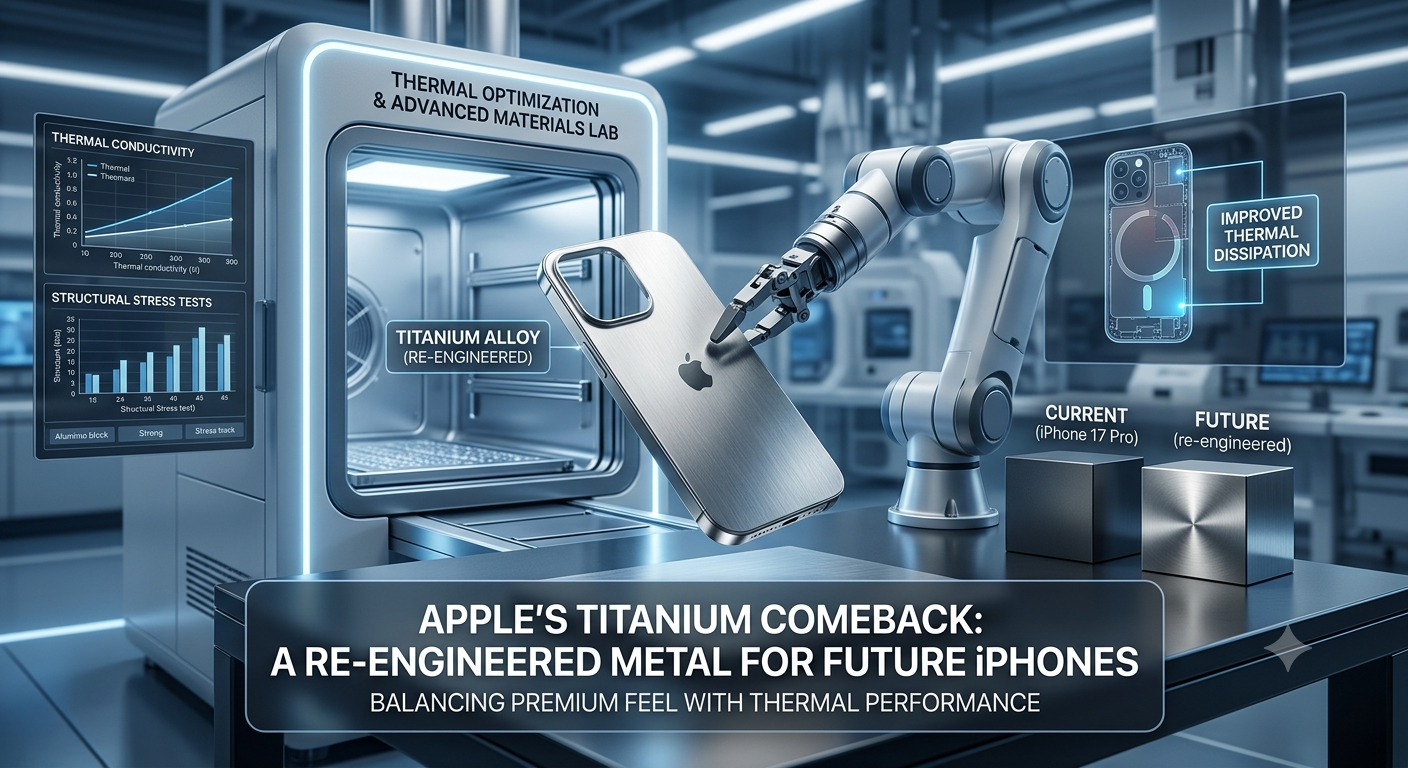
Apple may not be entirely finished with premium metallurgy for its flagship smartphones after all. According to a recent leak from prominent Weibo insider Instant Digital, the Cupertino tech giant is actively researching an advanced, next-generation version of its iPhone titanium material. This development comes amid widespread industry reports that Apple is transitioning its upcoming iPhone 17 Pro series back to an aluminum chassis.
The strategic retreat from titanium raised eyebrows across the technology sector. For the past two hardware generations—spanning the iPhone 15 Pro and the iPhone 16 Pro—Apple aggressively marketed aerospace-grade titanium as the definitive luxury and structural hallmark of its Pro lineup, celebrating its superior strength-to-weight ratio over legacy stainless steel. To see the full evolution of these design choices, check out our comprehensive TelefoneArena smartphone hub for real-time specification breakdowns.
The Thermal Reality of the iPhone 17 Pro Aluminum Shift
According to supply chain indicators, Apple’s decision to adopt an aluminum alloy frame for the iPhone 17 Pro lineup was primarily dictated by internal thermal management dynamics. Modern premium smartphones are increasingly strained by the relentless processing demands of on-device artificial intelligence, sustained gaming frame rates, and computational photography pipelines. Aluminum inherently dissipates thermal energy far more efficiently than titanium, keeping internal components cooler under heavy processing loads.
Intriguingly, Apple has not abandoned the material completely for this cycle; reports from MacRumors indicate that the ultra-thin "iPhone Air" or "iPhone Slim" variant will still utilize titanium. In this specific application, the mechanical rigidity of titanium is essential to prevent structural bending in an ultra-slim chassis, outperforming aluminum in structural density.
Why Apple is Engineering Next-Gen Titanium Formulas
The core of the new leak suggests that Apple views aluminum as a temporary engineering compromise rather than a permanent architectural shift. The company’s long-term vision remains tethered to premium alloys. The fundamental problem with standard titanium alloys is their low thermal conductivity relative to aluminum and copper. This trade-off becomes highly apparent as mobile chips push the limits of thermal design power (TDP).
To resolve this bottleneck, Apple is reportedly developing a proprietary, re-engineered titanium formula. The objective is to synthesize an alloy that maintains titanium’s signature scratch resistance, tensile strength, and elite aesthetic appeal, while vastly optimizing its thermal dissipation characteristics. If successful, this would allow future flagship iPhones to remain thin, light, and perfectly optimized for high-performance computing without overheating.
Industry Insight: Brands like Samsung and various Chinese OEMs are grappling with similar physical constraints, relying heavily on larger vapor chambers, advanced graphite sheets, and hybrid chassis designs to cool down dense internal components.
Furthermore, the leak notes that Apple is continuing its long-running research into liquid metal (amorphous alloys) for potential deployment in future ultra-premium devices—such as a rumored "iPhone Ultra"—though high manufacturing complexities continue to delay mass production timelines.
Addressing the iPhone 17 Pro 'Scratchgate' Controversy
Apple’s structural shifts have already drawn sharp scrutiny online. Several early users reported visible scuffs and finish abrasions on retail iPhone 17 Pro models, particularly on darker anodized color profiles, sparking a viral social media narrative dubbed "Scratchgate."
While Apple has clarified that many reported marks were actually "material transfers" caused by friction with MagSafe display stands rather than permanent structural damage, reviewers note that anodized coatings on aluminum show wear more visibly over time than native titanium finishes. This aesthetic vulnerability underscores the difficult balancing act Apple faces among cooling efficiency, structural durability, weight reduction, and premium external aesthetics.
For consumers looking to upgrade, the upcoming refresh highlights that raw material names are only part of the equation. It is crucial to evaluate real-world metrics like sustained thermal performance, battery longevity, and long-term chassis durability. Stay tuned to TelefoneArena for hands-on thermal testing and architectural analyses as these devices hit the market.