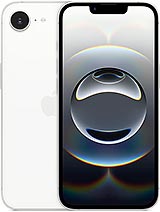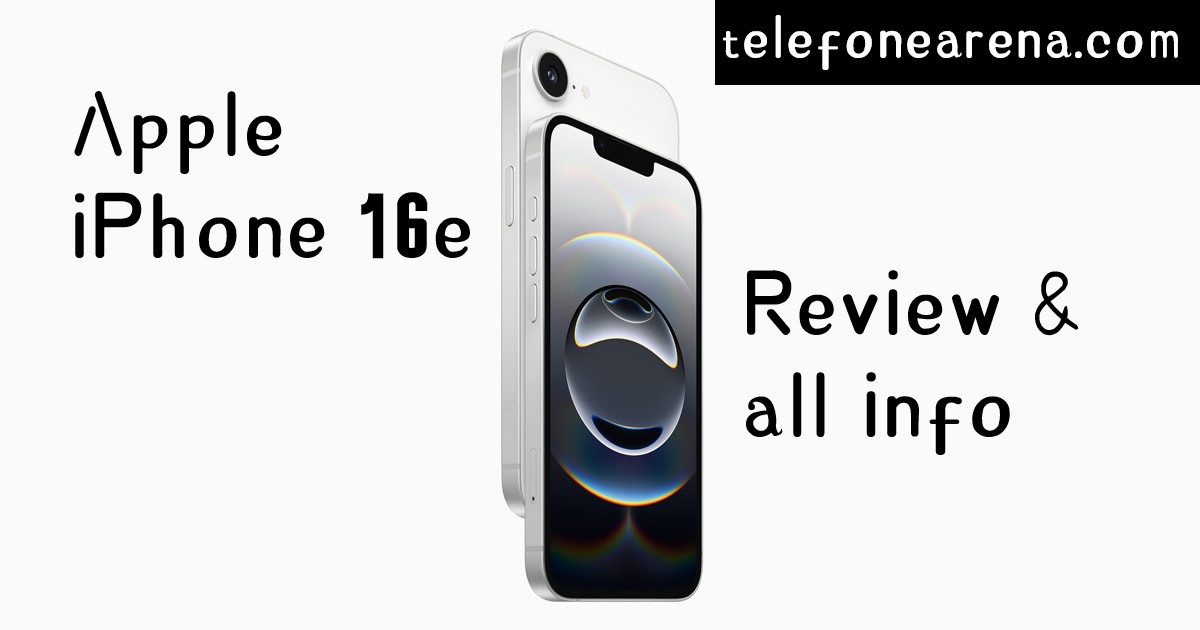
When the iPhone 16e was launched, it promised the best of the flagship experience at an affordable price, but does a $599 cost justify the claim to make it a real budget flagship winner? Find out everything here.
Answer: Yes, the Apple iPhone 16e makes a worthy contender for those loyal to iOS devices and who would like to have the A18 processor and Apple Intelligence without having to shell out money for a complete flagship device. Based on available specs and experiences reported, it features excellent processing capabilities, good single-camera photography experience, and battery performance. But due to its 60Hz OLED screen, single camera at the back, and $599 starting price tag, it gives Android devices legitimate chances to catch up.
The iPhone 16e: Apple's Most Controversial Recent Launch?
In February 2025, when Apple dropped its iPhone SE series and launched the iPhone 16e, it drew both admiration and criticism from the tech community. On paper, this became the most impressive budget iPhone ever, because Apple squeezed its newest A18 processor, AI capabilities, 48 MP primary camera, Face ID, USB-C port, and 6.1-inch OLED screen all into a package worth $599. It is the cheapest phone with an A18 chip out there.
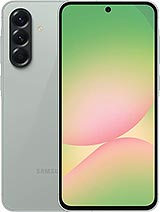
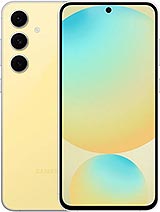
But there's a problem. The budget flagship segment has never been more competitive. Google's Pixel 9a costs $499 and ships with a 120Hz OLED, dual cameras, and seven years of software updates. The Samsung Galaxy S24 FE brings a triple-lens camera system and a large AMOLED screen at a similar or lower price point. So is the iPhone 16e actually a budget flagship — or just a slightly cheaper flagship that cuts too many corners?
This article breaks down everything we know: specs, design, camera performance, battery life, software, real-world trade-offs, and how the 16e stacks up against its closest rivals. Whether you're upgrading from an older iPhone or comparing iOS to Android for the first time, this guide is for you.
Apple iPhone 16e: Full Specs at a Glance
| Category | Specification |
|---|---|
| Launch Date | February 28, 2025 |
| Starting Price | $599 (128GB) |
| Display | 6.1" Super Retina XDR OLED, 60Hz, 1200 nits (peak outdoor) |
| Chipset | Apple A18 (3nm) — 6-core CPU, 4-core GPU, 16-core Neural Engine |
| RAM | 8GB |
| Storage Options | 128GB, 256GB, 512GB |
| Rear Camera | 48MP f/1.6 main (single lens) with Smart HDR 5, Night Mode, Portrait |
| Front Camera | 12MP TrueDepth with Face ID |
| Battery | 4,005mAh — up to 26 hrs video playback |
| Charging | 25W wired, 7.5W Qi wireless (no MagSafe) |
| Connectivity | 5G via Apple C1 modem (first Apple-designed modem), Wi-Fi 6, Bluetooth 5.3 |
| Biometrics | Face ID (notch design — no Dynamic Island) |
| Build | Aluminum frame, Ceramic Shield front, glass back, IP68 |
| Colors | Black, White |
| OS at Launch | iOS 18.3.1 (upgradeable to iOS 26) |
| Special Features | Apple Intelligence, Action Button (no Camera Control) |
You can browse the full Apple iPhone lineup on TelefoneArena for a complete overview of all current models and their specs side by side.
Design & Build: Premium Feel, Familiar Face
The iPhone 16e takes after the physical measurements of both the iPhone 13 and the iPhone 14. This phone features an aluminum body that comes with squared edges, which is part of the current design philosophy of Apple. It has the premium feel with the glass backing and Ceramic Shield front.
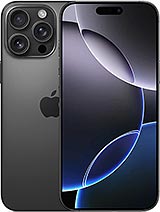
What you won't find is the Dynamic Island. The iPhone 16e retains a traditional notch at the top of the display — the same one last seen on the mainstream iPhone lineup with the iPhone 14. In 2025, this is a noticeable step back compared to any iPhone 15 or 16 model in the standard or Pro lineup. It's also available in only two colors — Black and White — a stark contrast to the vibrant color options on the standard iPhone 16 Pro Max.
That said, the phone carries an IP68 dust and water resistance rating, which is the same protection level found on full flagship iPhones. The Ceramic Shield display protection also holds up well against everyday drops. On paper, the build quality punches above its price in most ways — just not in terms of visual modernity.
Display: The Most Criticized Trade-Off
While the 6.1-inch Super Retina XDR OLED display is indeed very impressive on many accounts (good blacks, accurate color reproduction, decent outdoor visibility), its 60Hz screen refresh rate is probably the only major trade-off Apple had to make for this smartphone. In the modern world where even budget Android devices come equipped with either 90Hz or 120Hz screens, the plain 60Hz seems outdated in every way possible.
What this means is that scrolling social media feeds, surfing the internet, and transitioning between various apps is slightly less smooth on the 16e than on practically every other smartphone you can buy at the same price point. As Android Police said, it felt like something "out of 2018, not 2025".
The maximum screen brightness comes in at about 1,200 nits in outdoor environment, which while acceptable, is notably lower than the Google Pixel 9a's 2,700+ nits. Should you spend a lot of time using your device outdoors on a sunny day, you'll notice the difference. Otherwise, the OLED display and color accuracy are absolutely amazing indoors.
No Always On Display either, which is yet another feature reserved by Apple for their Pro series. The display is absolutely fine for those buyers who would be using the phone mainly indoors. For people who are power users, content creators or those who have moved from an Android flagship, 60 Hz is actually a limiting factor.
Performance: Where the 16e Genuinely Shines
This is where the iPhone 16e makes its strongest case. The A18 chip — the same silicon that powers the standard iPhone 16 — is a generational leap over what any Android phone at this price ships with. According to Apple, the 6-core CPU is up to 80% faster than the A13 Bionic in the iPhone 11, and the 16-core Neural Engine runs machine learning models up to 6x faster than previous generations.
As a result, applications open instantly, the experience of multitasking becomes smooth, and the AAA mobile games will run using the hardware-accelerated ray tracing. In CPU benchmark tests, the 16e model turns out to be comparable to the regular iPhone 16 model, lagging behind the Pro models by 2–3%. It is an impressive achievement for an entry-level iPhone.
There is one small aspect to consider: the 16e model uses a 4-core graphics processing unit instead of the 5-core GPU used in the regular iPhone 16 model. From the point of view of the overwhelming majority of iPhone users, there will be no difference. However, if you plan to use the iPhone to play games with high settings, then the 16e could be slightly disadvantaged due to this factor.
Finally, Apple presented its own in-house modem in the iPhone 16e — the Apple C1 modem. According to Apple, it is the most energy-efficient iPhone modem which contributes to better 5G battery life and connectivity. Speed test results demonstrate that the C1 modem performs similarly to the Qualcomm modem used in other iPhone 16 models.
If sheer, futureproofing performance is your prime concern and if you’re looking at phones costing between $500 and $700, there is simply no other phone that can compete with the iPhone 16e when it comes to performance alone. There isn’t even really much of a contest.
Camera: Impressive for One Lens — But One Is the Limit
The reason behind Apple’s decision to have one rear camera on the iPhone 16e model is that it has only one rear camera which is 48 MP f/1.6 lens and it doesn’t include an ultrawide lens, a telephoto lens or a macro lens. It’s the most evident hardware trade-off present on the whole device.
What you do get is genuinely strong for a single camera. Smart HDR 5, Deep Fusion, Night Mode, Portrait mode with depth control, and Photographic Styles all work well. Still photography in good light is clean, detailed, and color-accurate. Portrait mode, however, only supports human faces — you can't apply it to pets or objects, unlike the more capable computational photography systems on the Pixel 9a or even the older iPhone 15 Pro Max.
The video recording capability of the device is also impressive. For instance, it supports 4K videos at 60fps and Smart HDR 5 with spatial audio recordings. However, there is no Cinematic Mode and Action Mode available which are found on even the basic version of iPhone 16.
The bigger issue, as noted by Android Authority, is compositional flexibility. An ultrawide lens changes how you shoot landscapes, interiors, and group photos. A telephoto adds reach without crops that degrade quality. The iPhone 16e's 10x digital zoom produces usable but noticeably soft results beyond 3x. In a world where even budget Android phones ship with multi-lens setups, the single-camera decision stands out — and not favorably.
The 12MP TrueDepth front camera performs well for selfies and video calls. It supports Face ID reliably and delivers natural-looking portraits, which is exactly what most people need.
Camera Summary: What the 16e Can and Can't Do
- Can do: Excellent stills in all lighting, smart portrait mode for people, Night Mode, 4K video, spatial audio recording
- Cannot do: Ultrawide shots, optical zoom, Cinematic Mode, Action Mode, pet/object portrait mode
Battery Life: A Genuine Surprise
With the massive battery of 4,005 mAh — much larger compared to the iPhone SE 3 — coupled with the power efficiency of the A18 chip and Apple C1 modem, battery performance is unexpectedly good. The device provides up to 26 hours of video playback; and in day-to-day usage, most users experience comfortable battery performance.
However, let us not forget that the formula for power efficiency does not necessarily imply a bigger battery. Optimized chip-to-software by Apple surpasses any optimization done by an Android OEM, whereas the C1 modem cuts down the energy consumption due to 5G connection. From the current information, the 16e exceeds the 4,000 mAh cell expectations.
But there are some drawbacks with charging. Wired charging supports maximum 25W, whereas wireless charging can reach up to 7.5W with Qi — but no MagSafe option. As of 2025, 25W is below 45W to 65W charged by competitors' flagships on Android. Charging the battery from 0 to 100% will take around 90 minutes.
Software & Apple Intelligence: A Key Selling Point
iPhone 16e runs on iOS 18.3.1 and is capable of running up to iOS 26, which is Apple's latest OS version. Apple Intelligence, Apple's on-device AI, is completely supported by iPhone 16e. The features included in Apple Intelligence include writing tools, image generation, intelligent notifications, and improved functionality of Siri in third-party applications.
To use Apple Intelligence, one needs to have A17 Pro or A18 chip in his phone, meaning that iPhone 16e is one of the cheapest phones for such feature set. Additionally, it perfectly fits into an ecosystem of Apple products (Macbook, iPad, Apple Watch, AirPods). None of the Android devices could compete in this regard with iPhone 16e.
As for the software longevity, Apple supports its iPhones for about 6 years and more. Based on the support schedule provided by the company, 16e will be getting updates up to at least iOS 32 or 33, making it quite a long-term solution. That is essential when assessing value – a $599 phone getting updates for 6 years is cheaper per year than $499 Android phone with only 4-year-long support period.
If you're unsure which phone to pick for your usage habits and budget, try the TelefoneArena AI Phone Recommender — answer a few questions and get a personalized match.
iPhone 16e vs. Its Closest Budget Flagship Rivals
| Feature | Apple iPhone 16e | Google Pixel 9a | Samsung Galaxy S24 FE |
|---|---|---|---|
| Price (launch) | $599 | $499 | $649 |
| Display | 6.1" OLED, 60Hz | 6.3" OLED, 120Hz | 6.7" AMOLED, 120Hz |
| Chipset | Apple A18 (3nm) | Google Tensor G4 | Exynos 2400e (4nm) |
| RAM | 8GB | 8GB | 8GB |
| Rear Cameras | 1 (48MP main) | 2 (48MP + 13MP UW) | 3 (50MP + 8MP tele + 12MP UW) |
| Battery | 4,005mAh | ~5,000mAh | 4,700mAh |
| Wired Charging | 25W | 18W | 25W |
| Wireless Charging | 7.5W Qi (no MagSafe) | Qi2 (15W) | 15W |
| OS Updates | ~6+ years | 7 years | 4 years Android + 4 yrs security |
| IP Rating | IP68 | IP68 | IP68 |
| MagSafe / Ecosystem | No MagSafe; full Apple ecosystem | Google Pixel ecosystem | Samsung ecosystem |
For a hands-on side-by-side comparison of any two or three phones, use the TelefoneArena Compare Tool to stack up specs visually.
Pros and Cons of the iPhone 16e
Pros
- A18 chip delivers class-leading CPU performance
- Full Apple Intelligence support
- Excellent iOS ecosystem integration
- Strong single-camera stills and Night Mode
- IP68 water resistance, Ceramic Shield protection
- Apple C1 modem — efficient and reliable 5G
- USB-C (finally), Action Button included
- 6+ years of software support expected
- Compact, pocketable 6.1-inch form factor
Cons
- 60Hz display in 2025 is a hard sell
- Single rear camera with no ultrawide or telephoto
- No MagSafe wireless charging
- No Dynamic Island — notch design feels dated
- No Cinematic Mode or Action Mode video
- Limited color options (only Black and White)
- $100 more expensive than the Google Pixel 9a
- No Always-On Display
- Portrait mode limited to human faces
Who Should Actually Buy the iPhone 16e?
Buy It If:
- You're already deep in the Apple ecosystem — you use a MacBook, iPad, AirPods, Apple Watch, iCloud, or iMessage daily. Switching to Android means leaving all of that behind. The 16e gives you iOS at the lowest available price.
- You're upgrading from an iPhone 11, 12, or SE — the A18 chip is a staggering generational leap over the A13 or A14 Bionic. Your experience of speed, AI features, and camera quality will transform meaningfully.
- You want Apple Intelligence features without spending flagship money — the 16e is the most affordable way to access Apple's full AI suite, which requires A17 Pro or A18 silicon.
- You value software longevity above all — for buyers who keep phones for four to six years, Apple's update track record is unmatched. The 16e should remain fully supported longer than any current Android competitor in this price range.
- You prioritize security and privacy controls — iOS's closed ecosystem offers predictable privacy behavior and consistent security patches, which matter to many professional and enterprise users.
Skip It If:
- A 120Hz display is non-negotiable for you — it genuinely makes a daily difference in smoothness.
- You shoot a lot of landscapes, architecture, or anything that benefits from an ultrawide lens.
- You want the best hardware-per-dollar ratio — the Pixel 9a at $499 offers more display, more cameras, and competitive longevity for less money.
- Fast charging matters for your routine — 25W is usable, but 45W–65W competing phones recharge in half the time.
- You're comfortable on Android and have no ecosystem ties to Apple.
Budget Flagship Alternatives Worth Considering
Google Pixel 10a — $449
The Pixel 10a is now available at $449 on TelefoneArena and brings Google's Tensor G4 chip, a 6.3-inch OLED panel with higher brightness, a dual-camera setup, and seven years of guaranteed software updates. It's a remarkable value proposition. The camera computational processing is among the best in this price range, and Google's clean Android experience ages well. Based on available specs, the Pixel 10a beats the 16e on screen quality, camera versatility, and raw price-to-feature ratio — if you're open to Android.
Samsung Galaxy S24 FE — $649
The Samsung Galaxy S24 FE sits slightly above the 16e in price but delivers a triple-camera system (including a 3x optical telephoto), a large 6.7-inch 120Hz AMOLED, and Samsung's Galaxy AI features. It's the better choice for photography enthusiasts in this tier. The Exynos 2400e chip is less powerful than the A18 in synthetic benchmarks but handles everyday tasks smoothly. Samsung's four years of Android updates is a shorter commitment than Apple's six-plus, but Galaxy AI features and DeX support add genuine productivity value.
Samsung Galaxy A56 — ~$400
The Samsung Galaxy A56 brings a 120Hz Super AMOLED display, OIS on the main camera, and a competitive mid-range package at a lower price point. For buyers on a tighter budget who want a capable daily driver with good display quality, it's worth serious consideration. Compare it alongside other options in the budget phone category on TelefoneArena.
Staying Within Apple — iPhone 16
If you're committed to iOS and have an extra $200, the standard iPhone 16 adds an ultrawide camera, the Camera Control button, Dynamic Island, and Action Mode video — the exact features that would address most of the 16e's biggest weaknesses. For buyers who can stretch to $799, the jump from 16e to 16 is arguably more meaningful than the jump from 16 to 16 Pro. You can compare the full Apple iPhone lineup to decide where the value sweet spot lands for you.
So, Is the iPhone 16e the Best Budget Flagship?
The honest answer is: it depends entirely on what you mean by "best."
If "best" means the most powerful processor, the smoothest iOS experience, Apple Intelligence support, and the most future-proof software lifecycle in the sub-$650 category — then yes. The iPhone 16e wins that argument convincingly.
If "best" means the most balanced spec sheet for the money, the most versatile camera system, or the smoothest display — then no. The Google Pixel 9a delivers more hardware flexibility at a lower price, and the Samsung Galaxy S24 FE offers a more complete camera experience for a modest premium.
According to GSMArena, the iPhone 16e received generally positive reviews, with many praising the Apple C1 modem performance and battery life. The most common criticisms center on the price increase over the iPhone SE 3 and the hardware trade-offs — particularly the single camera and 60Hz display. Patrick Holland at CNET gave it 8.5 out of 10, a strong score that reflects how well Apple executed its vision, even if that vision is a deliberately minimal one.
The iPhone 16e is best understood not as Apple's attempt to win the budget flagship hardware war — it's Apple's attempt to bring its full AI and software ecosystem to the lowest price point possible while maintaining build quality standards. By that measure, it succeeds. It's a very Apple kind of budget phone: premium build, premium chip, premium software, deliberately limited in ways that push you to spend more if you want everything.
For context on how the iPhone 16e fits into Apple's broader 2024–2025 lineup, see the full iPhone 16 Pro Max specs page and compare the hierarchy from top to bottom.
It's also worth noting that as of March 2026, the iPhone 16e has officially been discontinued in favor of the iPhone 17e. If you're shopping now, pricing on the 16e may have dropped at select retailers — which changes the value equation considerably. At $499 or below, many of the competitive arguments against it weaken significantly.
Final Verdict: TelefoneArena Assessment
Rating: 7.8 / 10
The Apple iPhone 16e is a well-built, powerfully-chipped iOS phone that makes genuine sense for existing Apple ecosystem users and anyone upgrading from a phone three or more generations old. Based on its specs and reported performance, the A18 chip and Apple Intelligence support give it a longer useful life than virtually any Android phone in this price tier.
It loses points for the 60Hz display, the single-lens camera system, the absence of MagSafe, and a starting price that requires buyers to accept meaningful compromises compared to Android alternatives. It's not the best budget flagship on paper — but it may be the right budget flagship for you, depending on your ecosystem and priorities.
Best for: Apple ecosystem users, iPhone SE upgraders, long-term iOS fans, Apple Intelligence enthusiasts.
Skip if: Display smoothness, camera versatility, or maximum hardware value are your top priorities.
Practical Buying Advice
- Buy refurbished if you can. Since the 16e has been discontinued, certified refurbished units from Apple or authorized retailers often offer the same build quality at a meaningful discount.
- Storage: 128GB is enough for most people, but if you shoot a lot of 4K video locally, step up to 256GB. There's no microSD slot.
- Check carrier trade-in deals. Apple and major carriers frequently offer trade-in credits that can bring the effective price well below $599.
- Use the compare tool before buying. The TelefoneArena Compare Tool lets you stack the iPhone 16e against any rival phone spec-by-spec in seconds.
- Not sure? Try the AI Phone Recommender — describe your priorities and budget, and get a personalized shortlist that might surprise you.
Frequently Asked Questions
Is the iPhone 16e worth buying in 2026?
If you can find it at a discounted price following the launch of the iPhone 17e, it offers excellent value — especially for iOS users. At the original $599 launch price, it competes less favorably against Android rivals like the Google Pixel 10a. At $449–$499 or below, it becomes a strong contender.
What is the biggest weakness of the iPhone 16e?
Based on available information, the 60Hz display refresh rate and single rear camera are the most consistent criticisms. In a market where $400–$499 Android phones offer 120Hz OLED screens and dual cameras, these feel like notable trade-offs for a $599 device.
Does the iPhone 16e support Apple Intelligence?
Yes — fully. The A18 chip meets the hardware requirement for Apple Intelligence features, making the 16e the most affordable iPhone with complete AI support. This includes Writing Tools, image generation, smart Siri integration, and notification summaries.
How does the iPhone 16e compare to the Pixel 9a?
On paper, the Pixel 9a ($499) offers a larger 120Hz display, dual cameras, and slightly better battery capacity. The iPhone 16e ($599) counters with the faster A18 chip, superior iOS ecosystem integration, and Ceramic Shield protection. If you're open to Android, the Pixel 9a offers more hardware per dollar. If you need iOS, the 16e is the most affordable entry point. Use the compare tool to see a full spec breakdown side by side.
Is the iPhone 16e good for gaming?
Yes. The A18 chip with hardware-accelerated ray tracing and a 4-core GPU makes the 16e one of the most capable gaming phones in its price range. AAA mobile games run smoothly. The 60Hz display doesn't affect gaming performance technically, though 120Hz would offer a smoother visual experience in fast-paced titles.
How long will Apple support the iPhone 16e?
Apple typically supports iPhones for six or more years. Based on historical patterns, the iPhone 16e should receive iOS updates through approximately 2030–2031. This longevity is one of its strongest arguments against the competition in the budget flagship category.
Does the iPhone 16e have MagSafe?
No. The iPhone 16e supports standard Qi wireless charging at up to 7.5W but does not include MagSafe. This means MagSafe accessories — cases, wallets, chargers — will not magnetically attach or charge at MagSafe speeds. This is a notable omission for users invested in the MagSafe accessory ecosystem.
What are the best alternatives to the iPhone 16e?
The top alternatives are the Google Pixel 10a ($449, Android, 120Hz OLED, dual cameras), the Samsung Galaxy S24 FE (triple cameras, 120Hz AMOLED), and the Samsung Galaxy A56 for budget-first buyers. You can browse all alternatives in the flagship category and the mid-range category on TelefoneArena.
Sources & Further Reading
- Apple Newsroom — Official iPhone 16e Announcement
- GSMArena — iPhone 16e Full Specifications & Reviews
- Android Authority — iPhone 16e vs Android Budget Flagships Analysis
- Tom's Guide — Pixel 9a vs iPhone 16e Comparison
Explore More on TelefoneArena
- All Apple iPhones — Specs, Prices, and Comparisons
- All Google Pixel Phones
- All Samsung Galaxy Phones
- Best Flagship Phones
- Best Budget Phones
- Best Mid-Range Phones
- Compare Any Two Phones
- AI Phone Recommender — Find Your Perfect Match
Article published June 2026. Specifications and pricing are based on publicly available launch information. Prices may have changed. Always verify current pricing with your local retailer or carrier.