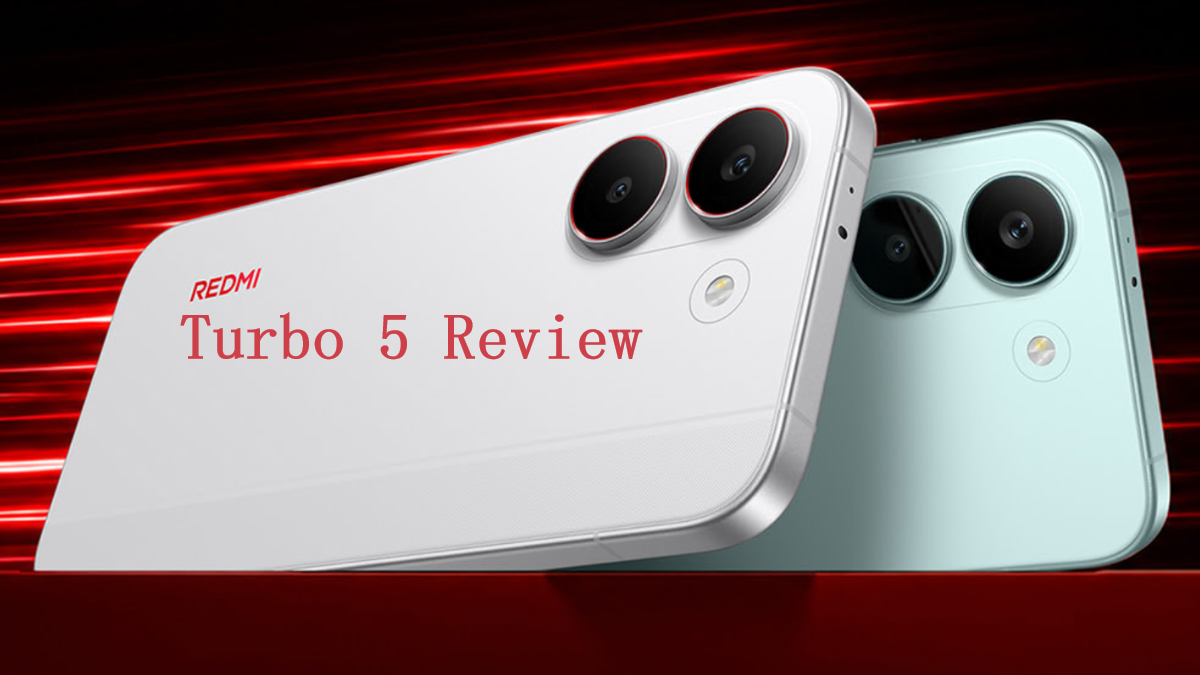
Okay, let's get started. The Xiaomi Redmi Turbo 5 is worth buying if you value battery life and raw performance over camera versatility. Based on its listed specs, it pairs a 7,560 mAh silicon-carbon battery with 100W charging, a 120 Hz AMOLED display with a 3,500-nit rating, and MediaTek's new Dimensity 8500 Ultra chipset. It's priced lower than most "flagship killer" rivals. The drawbacks are the lack of wireless charging, display protection that isn't confirmed for all market variants, and a camera setup that's good but not exceptional. If you want a similar battery with a larger screen and stronger chipset, consider the Redmi Turbo 5 Max before you buy.
What Is the Redmi Turbo 5, Exactly?
In January 2026, Xiaomi launched the Redmi Turbo 5, the first phone in the new "Turbo" sub-series. It slots in between the budget-focused Redmi Note line and the gaming-oriented Poco range. The phone reached India in June 2026 and now competes directly with performance-first phones from iQOO, OnePlus, and Poco's own X8 Pro.
The idea behind it is straightforward: near-flagship performance and an unusually large battery, without flagship pricing. On paper, that's exactly what it delivers. According to GSMArena, the China unit ships with a 7,560mAh battery, while the Indian variant uses a slightly smaller 7,540mAh cell, a difference small enough that it won't change how the phone actually feels day to day.
Redmi Turbo 5 Specifications at a Glance
| Spec | Redmi Turbo 5 |
|---|---|
| Display | 6.6" AMOLED, 1268 x 2756px, 120Hz, 3,500 nits peak |
| Chipset | MediaTek Dimensity 8500 Ultra (4nm) |
| RAM / Storage | 12GB/16GB RAM, 256GB/512GB UFS 4.1 |
| Rear Cameras | 50MP f/1.5 OIS (Sony IMX882) + 8MP ultrawide |
| Front Camera | 20MP |
| Battery | 7,560mAh (Si/C), 100W wired, 27W reverse |
| OS | Android 16, HyperOS 3 |
| Weight / Thickness | 204g / 8.2mm |
| Price (launch) | Around $499 globally; roughly ?35,999–40,999 in India |
A full breakdown of every spec, including connectivity details and benchmark numbers, is available on the Redmi Turbo 5 specs page on TelefoneArena.
Design and Build Quality
The Redmi Turbo 5 has a glass front and aluminum frame. It weighs 204 grams and is 8.2 mm thick. While not the lightest phone in its class, this is a reasonable trade-off for such a large battery. The China and India launch units feature a circular RGB lighting ring around the rear camera module that pulses for calls, charging status, and music playback. Some buyers will enjoy this styling choice, while others will disable it within the first week.
Coverage of the India launch from 91mobiles lists IP66, IP68, IP69, and IP69K dust and water resistance ratings, along with Corning Gorilla Glass 7i on the front panel. That's meaningfully durable for a phone at this price. TelefoneArena's own spec sheet shows display protection as unconfirmed pending further verification, so it's worth double-checking the listing for your specific region before you buy.
Display: Is the 6.6-inch AMOLED Actually Good?
Based on the listed specifications, yes, this is one of the best screens you'll find for around $500. It has a 6.6-inch AMOLED panel with a refresh rate of 120 Hz, a resolution of 1268 x 2756 (1.5K), support for Dolby Vision and HDR10+, and a peak brightness of 3,500 nits, which should provide good visibility outdoors, even in direct sunlight.
For comparison, the Google Pixel 10a tops out at 3,000 nits peak brightness on a smaller 6.3-inch panel, while the Infinix Note 60 Pro actually edges ahead on paper with a 4,500-nit peak and a faster 144Hz refresh rate. Spec sheets aside, all three should feel smooth for everyday scrolling, video, and casual gaming.
Performance: MediaTek Dimensity 8500 Ultra Explained
This is the headline feature of the phone. The Dimensity 8500 Ultra is MediaTek's newest premium mid-range chipset, built on a 4nm process with an all-big-core CPU design, meaning eight Cortex-A725 cores instead of the usual mix of performance and efficiency cores. According to MediaTek's own product page, the chip is built for sustained gaming performance with HyperEngine optimization and an Arm Mali-G720 MC8 GPU, aimed squarely at buyers who want near-flagship power without flagship pricing.
A note on benchmark numbers, because they vary a lot depending on the source: TelefoneArena's own listing shows an AnTuTu score around 800,000 for the Redmi Turbo 5, while Xiaomi's own marketing for the India launch claims scores above 2,000,000. Notebookcheck's chipset analysis places the Dimensity 8500 generally in the upper-mid performance class. Treat brand-published AnTuTu figures as best-case marketing numbers rather than guaranteed real-world results, since actual performance depends on thermal management, software optimization, and the exact SKU you end up buying.
In practice, the Redmi Turbo 5 should feel snappy and shouldn't bottleneck you for most users' everyday activities, such as using social apps, streaming, browsing, and light-to-moderate gaming. However, for sustained, high-refresh gaming at maximum settings over long periods of time, you can expect some thermal throttling, as with most phones in this segment — even with the larger vapor chamber cooling system that Xiaomi advertises.
If gaming performance is your single biggest priority, it's worth browsing TelefoneArena's gaming phones category to see how the Turbo 5 stacks up against devices built specifically for that purpose.
Camera Performance: 50MP Sony IMX882
The rear camera setup includes a 50MP main sensor (Sony IMX882, f/1.5 aperture, optical image stabilization (OIS)) and an 8MP ultrawide lens. As is common at this price point, there is no telephoto lens or macro sensor. Based on the listed specifications, the main sensor should perform well in daylight and moderately low-light conditions thanks to optical stabilization. However, without a dedicated telephoto lens, zoomed shots rely on digital cropping rather than true optical magnification.
There's no published DXOMARK score for the Redmi Turbo 5 yet, so any camera ranking claims should be treated as provisional until independent testing confirms them. For buyers who treat photography as the deciding factor, it's worth comparing this against phones built with imaging as the primary focus on TelefoneArena's camera phones category page.
The 20MP front-facing camera is standard for the segment. It's fine for video calls and casual selfies, but nothing stands out.
Battery and Charging: The Real Selling Point
This is where the Redmi Turbo 5 shines. Its 7,560 mAh (or 7,540 mAh depending on the market) silicon-carbon battery is impressively large, noticeably bigger than those of most flagship and mid-range phones. Paired with 100W wired charging, this phone should comfortably get heavy users through a full day with fast top-ups when needed.
The trade-off is missing wireless charging support, something both the Pixel 10a and Infinix Note 60 Pro include despite smaller batteries. If wireless charging is part of your daily routine, that's worth weighing against the Turbo 5's much bigger cell.
For anyone whose current phone struggles with battery drain after updates, it's also worth reading TelefoneArena's guide on solving battery drain issues after Android updates, useful context for understanding why raw mAh numbers don't always translate directly into real screen-on time.
Software and Update Policy
The Redmi Turbo 5 ships with Android 16 and Xiaomi's HyperOS 3. According to reports from the India launch, the phone will receive four years of major Android OS updates and six years of security patches. This is a significantly longer commitment than Xiaomi has historically offered on Redmi-branded devices and is competitive with what Samsung and Google promise on their own budget and mid-range lines.
HyperOS 3 offers the standard array of customization options, AI-assisted photo editing tools, and cross-device connectivity features. According to recent coverage, it also boasts improved interoperability with Apple devices. If software longevity is a factor in your buying decision — and it should be — this update policy is one of the Turbo 5's strongest selling points
Redmi Turbo 5 Price: Is It Good Value?
Pricing varies meaningfully by region:
- Global/reference pricing: around $499 for the launch configuration
- China: starting around CNY 2,299, roughly $424
- India: ?35,999 for the 8GB/256GB variant, up to ?40,999 for the 12GB/256GB model
At roughly $500, you're getting a 120Hz AMOLED display, a current-generation premium mid-range chipset, and one of the largest batteries in the segment. Compared to the Oppo Reno15c or Honor Power2, both sitting in a similar price band, the Redmi Turbo 5 leans harder into raw performance and battery capacity rather than camera refinement or design flair. Whether that trade makes sense depends entirely on how you actually use your phone day to day.
Redmi Turbo 5 vs Redmi Turbo 5 Max: Which Should You Buy?
Xiaomi released both phones simultaneously, and the difference matters more than the name suggests.
| Redmi Turbo 5 | Redmi Turbo 5 Max | |
|---|---|---|
| Display | 6.6" AMOLED, 120Hz | 6.8" AMOLED, 120Hz |
| Chipset | Dimensity 8500 Ultra | Dimensity 9500s (3nm) |
| Battery | 7,560mAh | 9,000mAh |
| Max Storage | 512GB | 1TB |
| Fingerprint Sensor | Optical, under-display | Ultrasonic, under-display |
| Launch Price | ~$499 | ~$549 |
Names aside: Redmi Turbo 5 or Redmi Turbo 5 Max? For roughly $50 more, the Max upgrades to a noticeably stronger flagship-tier chipset (the same Dimensity 9500s family used in higher-end devices), an even bigger 9,000mAh battery, and a faster ultrasonic fingerprint reader. If your budget has any flexibility at all, the Max is the better long-term buy. The regular Turbo 5 mainly makes sense if you specifically want the smaller, lighter form factor or you're working with a hard $500 ceiling.
Pros and Cons
Reasons to Buy
- Genuinely excellent battery life thanks to the 7,560mAh cell
- Fast 100W charging that minimizes downtime
- Vibrant 120Hz AMOLED display with very high peak brightness
- Capable main camera with OIS for stills and 4K video
- Strong, current-generation chipset for the price
- Long software update commitment (4 years OS / 6 years security)
Reasons to Avoid
- No wireless charging
- Display protection not confirmed on every regional variant
- Older USB 2.0 data transfer speeds
- No telephoto lens for true optical zoom
- Marketing benchmark scores should be treated with some skepticism until independently verified
Who Should Buy the Redmi Turbo 5?
This phone makes the most sense for:
- Heavy daily users who run out of battery before the day ends on their current phone
- Mobile gamers on a mid-range budget who want a modern chipset without flagship pricing
- Buyers upgrading from a 3 to 4 year old phone who want a meaningful jump in display quality and charging speed
It makes less sense for:
- Photography-focused buyers, who'd be better served by something with a dedicated telephoto lens or a higher DXOMARK-rated sensor
- Anyone who relies on wireless charging as part of their daily routine
- Buyers who want the smallest, lightest phone possible, since 204g isn't a compact build
If you're still weighing this against other options entirely, TelefoneArena's AI phone recommender can help narrow things down based on your actual budget and priorities rather than spec-sheet comparisons alone.
Best Alternatives to the Redmi Turbo 5
A few phones worth cross-shopping in the same price range:
- Google Pixel 10a — better camera processing and longer guaranteed software support (up to 7 major Android upgrades), but a smaller battery and slower 30W charging.
- Infinix Note 60 Pro — faster 144Hz refresh rate and wireless charging support, running on a Snapdragon 7s Gen 4 chipset instead of MediaTek silicon.
- Redmi Turbo 5 Max — the obvious in-house upgrade if your budget stretches another $50.
- Oppo Reno15c (India) — worth a look if design and camera software polish matter more to you than raw battery capacity.
For a deeper side-by-side breakdown of similarly priced mid-rangers, TelefoneArena's comparison piece on the Pixel 10a vs Infinix Note 60 Pro vs Motorola Edge 60 Neo covers several of these phones in more detail, and the Galaxy A56 vs OnePlus 13R vs Nothing Phone (3a) guide is useful if you're open to going slightly above $500.
You can also build your own side-by-side using TelefoneArena's phone comparison tool, or browse the wider Xiaomi lineup if you'd rather stay within the same ecosystem, including the flagship Xiaomi 17 Ultra or the budget-focused Poco M8 Pro.
Verdict
TelefoneArena Verdict: Worth Buying, With One Condition
Based on available information, the Redmi Turbo 5 earns its price tag if battery life and performance are genuinely your top priorities. It's not the best camera phone near $500, and the missing wireless charging will bother some buyers. But for anyone tired of charging their phone twice a day, this is one of the strongest battery-to-price ratios currently on the market. If your budget allows an extra $50, seriously consider the Redmi Turbo 5 Max instead, since the chipset and battery jump are significant.
Frequently Asked Questions
Is the Redmi Turbo 5 worth buying in 2026?
For most buyers who prioritize battery life and performance over camera versatility, yes, based on its listed specs, it offers strong value at its price point. Buyers who care more about photography or wireless charging may want to compare alternatives first.
Is the Redmi Turbo 5 good for gaming?
On paper, the Dimensity 8500 Ultra chipset should handle most current mobile games well at high settings, with the included vapor chamber helping manage heat during longer sessions. Expect some throttling in the most demanding titles, as with most phones in this price class.
How long does the Redmi Turbo 5 battery last?
With a 7,560mAh (or 7,540mAh in India) capacity, it should comfortably cover a full day of heavy use for most people. Actual screen-on time will vary based on display settings and app usage, as it does on every phone.
Does the Redmi Turbo 5 support wireless charging?
No. It supports 100W wired charging and 27W reverse wired charging, but there's no wireless charging coil.
What's the difference between the Redmi Turbo 5 and the Redmi Turbo 5 Max?
The Max has a larger 6.8-inch display, a more powerful Dimensity 9500s chipset, a bigger 9,000mAh battery, and an ultrasonic fingerprint sensor, for roughly $50 more at launch.
Does the Redmi Turbo 5 have a headphone jack?
No, there's no 3.5mm jack. Audio output relies on the USB-C port or Bluetooth.
Is the Redmi Turbo 5 waterproof?
Coverage of the launch units lists IP68 and IP69K ratings for dust and water resistance, though buyers should confirm this against their specific regional variant before relying on it for water exposure.
Specs and pricing reflect publicly available information at the time of writing and may vary by region and retailer. Always check the latest listing on the Redmi Turbo 5 page before purchasing, and see TelefoneArena's review methodology for how every device is evaluated.