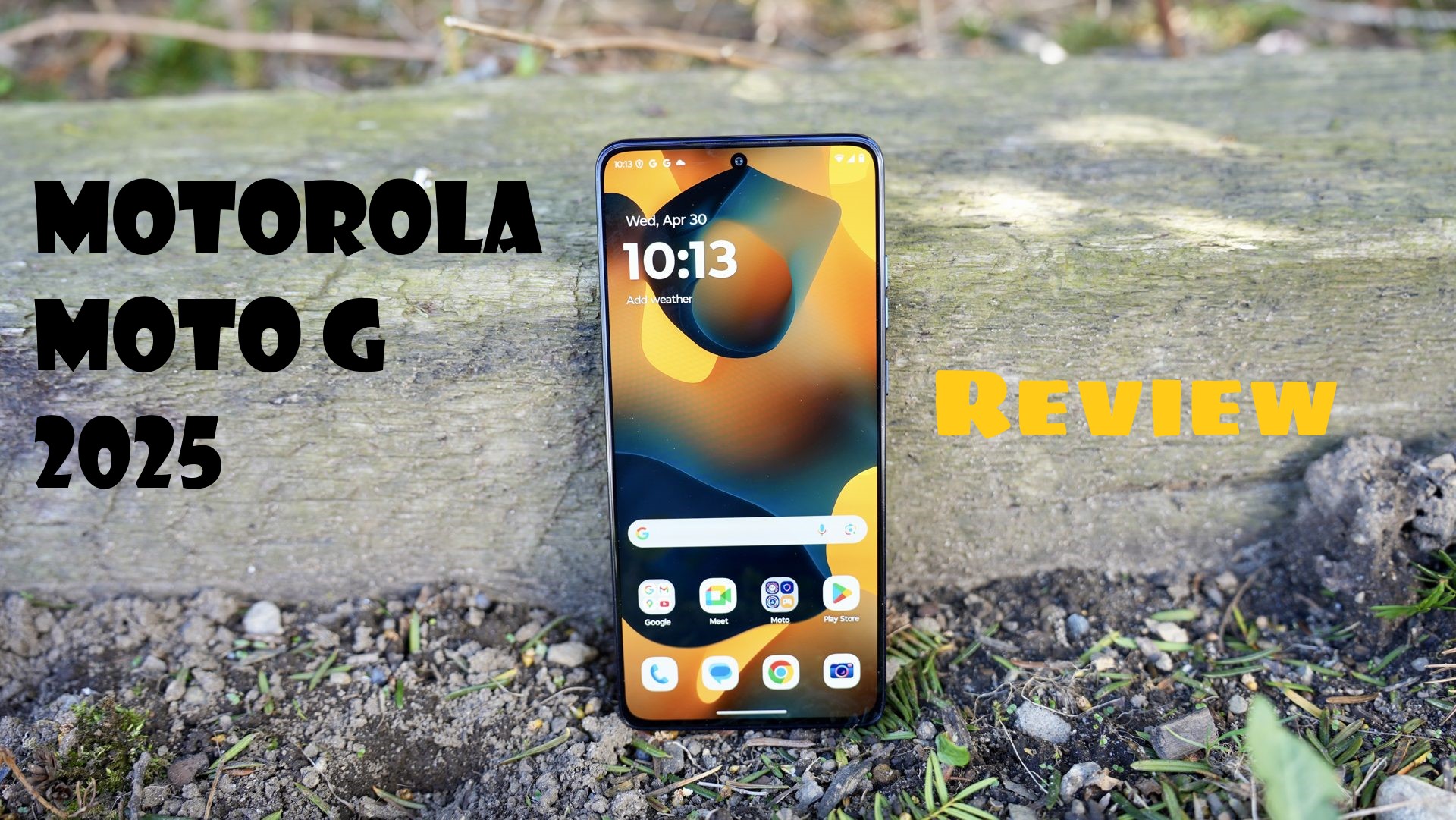
The Motorola Moto G 2025 is an affordable 5G smartphone that was released in January 2025 for $199. The Moto G 2025 uses the MediaTek Dimensity 6300 processor, features a 6.7" 120Hz IPS LCD display, 50MP main camera with optical image stabilization, 5000mAh battery, and comes preloaded with Android 15. While it still serves as a good option for people in 2026 who want a cheap smartphone with 5G and a big screen, the low-resolution 720p HD+ screen and short 2-year software support are notable compromises.
Why Are People Still Searching for the Moto G 2025 in 2026?
The Moto G 2025 is another one of those devices that continue to appear in promotions, offers, best-of-the-best, and cheap phones round-ups long after it was first announced. This wasn't by mistake, either. Motorola designed the device to be entry-level in terms of their 5G devices line-up — the type of phone that allows new smartphone users or those on a budget to avoid compromises and enjoy 5G technology.
Considering it's on sale for $60-$100 or bundled in carrier plans right now, there is an obvious question: Is it a jewel hiding in plain sight or a piece of outdated hardware?
We will examine all aspects of this device from the display, processor, camera, battery, software and its comparisons to the more recent devices.
You can also explore the full Motorola smartphone lineup on TelefoneArena, or use the AI Recommender Tool if you're still deciding between multiple phones across different budgets.
Full Specifications: Motorola Moto G 2025 at a Glance
| Category | Specification |
|---|---|
| Announced / Released | January 14, 2025 / January 30, 2025 |
| Display | 6.7" IPS LCD, 120Hz, 720 × 1604 px (HD+), ~262 ppi |
| Screen Protection | Corning Gorilla Glass 3 |
| Chipset | MediaTek Dimensity 6300 (6nm) |
| CPU | Octa-core (2×2.4 GHz Cortex-A76 + 6×2.0 GHz Cortex-A55) |
| GPU | Mali-G57 MC2 |
| RAM | 4 GB (+ up to 8 GB RAM Boost via virtual RAM) |
| Storage | 64 GB / 128 GB + microSDXC (up to 1TB) |
| Main Camera | 50 MP, f/1.8, PDAF, OIS + 2 MP macro |
| Selfie Camera | 16 MP, f/2.4 |
| Video | 1080p @ 30fps |
| Battery | 5000 mAh |
| Charging | 30W TurboPower (wired only, no wireless) |
| OS | Android 15 (up to 2 major upgrades promised) |
| Connectivity | 5G (Sub-6), Wi-Fi 5, Bluetooth, NFC, GPS |
| SIM | Nano-SIM + eSIM |
| Audio | Stereo speakers (Dolby Atmos), 3.5mm headphone jack |
| Build | Gorilla Glass 3 front, eco-leather (vegan) back, plastic frame |
| Dimensions / Weight | 167.1 × 76.3 × 8.2 mm / 193g |
| Colors | Forest Gray, Sapphire Blue |
| Launch Price | ~$199 (128GB unlocked) |
| Current Street Price (2026) | ~$60–$100 (discounted / carrier deal) |
For the official spec sheet, you can also check GSMArena's Motorola Moto G (2025) specs page, which is one of the most comprehensive databases for hardware data.
Display: Big Screen, Budget Resolution
The 6.7-inch screen itself is genuinely big for its price segment. Motorola nailed it in terms of the screen size as it is quite comfortable for video watching, YouTube browsing, and reading. Moreover, the 120 Hz adaptive refresh rate keeps all interactions quick and smooth.
Nevertheless, it is much harder to ignore the resolution that is 720 x 1604 pixels (HD+). With 262 PPI, the level of sharpness is definitely lower compared to Full HD+ display. If the smartphone is used casually — for social media, video streaming in 720p resolution, WhatsApp, and such — there is nothing wrong about it. However, people, who used to Full HD+ display in their mid-range devices, will definitely notice the difference.
The IPS LCD panel offers acceptable color accuracy and wide viewing angles, though there are no vibrant colors or true blacks as we would expect from the AMOLED panel. The maximum brightness reaches 1000 nits, which is quite acceptable for usage outdoors but not outstanding. The protection is offered by Gorilla Glass 3.
Bottom line on display: Big, smooth, gets the job done. The resolution is the only real disappointment, and it's a trade-off that keeps the price down.
Performance: The MediaTek Dimensity 6300 — What You Actually Get
Dimensity 6300 has a 6 nm architecture, just like many mid-range devices. Still, while it features the same manufacturing process, this chip has been optimized in terms of efficiency and budgeting, rather than maximizing its performance. In regular usage, taking into account information from benchmarks and behavior of comparable devices, it copes with messaging applications, social media, and video playback just fine.
What does become apparent under heavy load is that playing games on high settings in Genshin Impact or PUBG Mobile leads to frequent frames and warming. Games that do not require much power — Candy Crush, Subway Surfers, and similar — run without any problems. It is not an optimal smartphone for gaming, and Motorola never promoted it as such.
The amount of RAM in the device is quite limited, since the total amount of 4 GB physical RAM may seem somewhat insufficient in 2026. However, Motorola has come up with a solution — RAM Boost technology allows to allocate up to 8 GB of virtual memory by utilizing the space of the device's storage.
If performance is your priority, you might want to compare alternatives in our mid-range phones section, where newer chipsets offer meaningfully better sustained performance.
For reference on how the Dimensity 6300 stacks up, Notebookcheck's chip benchmark database provides detailed AnTuTu and CPU comparisons.
Camera System: 50MP With OIS — Better Than It Sounds
The 50MP main sensor with optical image stabilization (OIS) is the biggest technical surprise in this price bracket. OIS at under $200 is not a given — many phones in the $150–$250 range skip it entirely. On paper, OIS means noticeably steadier handheld photos in low light and smoother video.
The f/1.8 aperture lets in a good amount of light, and the 0.61µm pixel size is enhanced by Motorola's Quad Pixel technology, which combines four pixels into one for 12.5MP effective shots with better low-light sensitivity.
That said, there are honest limitations to acknowledge:
- The second camera is a 2MP macro — which is essentially a gimmick at this resolution. It won't replace a proper ultrawide lens.
- Video is capped at 1080p at 30fps. No 4K, no slow-motion modes worth noting. This is a budget phone through and through.
- The 16MP selfie camera at f/2.4 is serviceable for video calls and casual selfies but won't wow you in low light.
For most buyers taking photos of food, friends, and everyday moments in daylight, the main camera performs well above what the price suggests. Night shots benefit noticeably from the OIS, which helps reduce motion blur during longer exposures.
If camera quality is your primary driver, also check the best camera phones on TelefoneArena to see where the Moto G 2025 sits on the spectrum.
Battery Life and Charging: The Strongest Part of This Phone
The 5000mAh battery combined with a moderately efficient chipset translates to genuinely strong battery life on paper. Similar devices with the Dimensity 6300 chip routinely post 14–20 hours of screen-on time across mixed usage profiles, though actual performance will vary based on 5G signal strength, brightness settings, and usage patterns.
The 30W TurboPower charging is fast enough to get you from near-empty to a comfortable charge level in about an hour. It's not the 65W or 120W speeds you see in mid-rangers, but for a phone at this price, it's reasonable.
The absence of wireless charging is expected at this price but worth noting if you've grown accustomed to it on a previous device.
One often-overlooked strength: the dedicated microSD slot means you can add up to 1TB of storage without sacrificing a SIM slot — the SIM and microSD are separate trays.
Software: Android 15, Clean Experience, Limited Update Window
This smartphone comes pre-installed with Android 15 and Motorola's rather slim Hello UX layer, which adds some useful features like gestures, Moto Secure for managing your privacy, and the useful Quick Actions, while avoiding overwhelming the operating system with bloat.
Motorola has promised 2 major Android OS upgrades for this smartphone, which means that it will get up to Android 17 OS before it stops getting updates. That is not impressive by 2026 standards, since Google now offers 7 years of support for its Pixel phones, while Samsung offers 4–7 years of support for Galaxy A devices.
Since the smartphone will only get major Android OS upgrades for two years, then purchasing the phone now in 2026 could mean that you will have an outdated operating system after just one year of ownership.
Other positive software features include NFC for tap-to-pay, eSIM support for easier carrier switching, and Dolby Atmos stereo speakers that sound noticeably better than single-speaker budget phones.
For context on how software update policies vary across brands, Android's official guidance on software support is worth a read before committing to any device long-term.
Design and Build Quality
The Moto G 2025 uses an eco-leather (vegan leather) back that feels noticeably different from generic plastic — it's softer, less prone to fingerprints, and gives the phone a more premium feel in hand than its price suggests. The front uses Gorilla Glass 3, and the overall build is solid if not exceptional.
At 193g and 8.2mm thick, it's not the lightest or slimmest phone, but it's reasonable for a 6.7-inch device. The side-mounted fingerprint sensor is reliable and well-placed, and the punch-hole front camera keeps the display free of intrusive cutouts.
The water-repellent design offers basic splash protection against light rain or accidental spills, though this is not an IP68/69 rating — it won't survive submersion. Keep that in mind.
Pros and Cons: Honest Assessment
Pros
- 5G connectivity at a very accessible price
- 120Hz display — smooth for this price tier
- 50MP camera with OIS (rare at under $200)
- Clean Android 15 with minimal bloatware
- Strong battery life (5000mAh)
- Stereo speakers with Dolby Atmos
- 3.5mm headphone jack retained
- NFC for contactless payments
- eSIM support + dedicated microSD slot
- Eco-leather back feels premium
- 30W TurboPower fast charging
Cons
- 720p HD+ display — noticeably soft in 2026
- Only 4GB physical RAM
- Limited to 2 major Android OS upgrades
- No wireless charging
- 2MP macro is largely useless
- Video limited to 1080p @ 30fps
- No IP rating (only water-repellent)
- Mid-tier GPU — not suited for serious gaming
- USB Type-C 2.0 only (slow data transfer)
How Does the Moto G 2025 Compare to Its Alternatives in 2026?
This is where the buying decision gets interesting. In 2026, the Moto G 2025 faces competition not just from rivals but from Motorola's own newer lineup.
| Phone | Price (approx.) | Display | Chipset | RAM | Battery | OS Updates |
|---|---|---|---|---|---|---|
| Moto G 2025 | ~$60–$100 | 6.7" 120Hz HD+ | Dimensity 6300 | 4 GB | 5000mAh 30W | 2 major |
| Moto G Power (2026) | TBD / ~$150+ | 6.8" 120Hz FHD+ | Dimensity 6300 | 8 GB | 5200mAh 30W | 2 major |
| Moto G17 | ~$179 | 6.7" FHD+ | Varies by region | Varies | 5000mAh | 2 major |
| Moto G Stylus 5G (2025) | ~$480 | 6.7" 120Hz AMOLED | Snapdragon 6 Gen 3 | 8 GB | 5000mAh 68W | 2 major |
| Google Pixel 10a | ~$449 | 6.3" OLED FHD+ | Tensor G4 | 8 GB | 5100mAh | 7 years |
At its current street price of $60–$100, the Moto G 2025 is hard to argue against if 5G connectivity and a large screen are your priorities. But if you're paying $150+, the Moto G Power (2026) makes more sense — it doubles the RAM, bumps storage to 128GB as standard, adds a proper ultrawide camera, and has a Full HD+ display.
You can also run a side-by-side spec comparison using the TelefoneArena comparison tool to see how these phones measure up across every dimension.
Who Should Buy the Moto G 2025 in 2026?
This phone makes sense for you if:
- You're buying on a very tight budget and need 5G (sub-$100 range)
- You primarily use your phone for calls, messaging, social media, and light video
- You want a large screen without paying flagship prices
- You're buying it as a secondary or backup phone
- You're a first-time smartphone buyer who doesn't need the absolute best specs
- You value a 3.5mm jack and real expandable storage (both included)
You should look elsewhere if:
- You plan to keep the phone for 3–4+ years (limited software updates)
- You care about display sharpness — 720p will bother you over time
- You do any serious mobile gaming
- You want to record good video (1080p only, no 4K)
- You're upgrading from a mid-range phone — this will feel like a step down in display quality
If you're unsure what category your needs fall into, the TelefoneArena AI phone recommender can match you with phones based on your specific use case and budget.
The Software Update Issue — A Real Concern in 2026
This deserves its own section because it's the most underrated factor in smartphone buying decisions. Motorola's two-year major update commitment for the Moto G 2025 means the phone was eligible for Android 16 and possibly Android 17 — and that's where guaranteed OS updates stop.
In mid-2026, that means the update window is already closing or may be nearly complete. Security patches may continue for a while longer, but new feature additions and OS-level improvements will stop arriving.
If you're buying a phone in 2026 and want it to last until 2028 or beyond with full software support, this is a real trade-off. The Google Pixel 10a offers 7 years of guaranteed updates at $449, which is a dramatically better long-term value proposition even if it costs more upfront.
For context on how software update policies have evolved across manufacturers, Android Authority's comparison of Android update policies by brand is an excellent reference.
On the budget phones section of TelefoneArena, you can filter by price and find alternatives that may offer better longevity.
Buying Advice: What's the Right Price to Pay in 2026?
Based on available market data and where the Moto G 2025 currently sits in the product cycle, here's a practical pricing guide:
- Under $80: Excellent deal. The hardware holds up well for basic use, and the 5G radio is genuinely useful.
- $80–$120: Still reasonable, especially if bundled with a carrier plan that offers data benefits.
- $120–$160: Starting to look questionable. For around $150–$179, the Moto G17 offers better specs.
- Above $160: Skip it. At this price in 2026, you have much better options available.
Always buy from reputable sellers and confirm the device is unlocked for your carrier before purchasing. The Moto G 2025 supports wide 5G band coverage (Sub-6) and works with T-Mobile, AT&T, Verizon, and most major prepaid US carriers.
To see what other phones under $300 are currently available, TelefoneArena's price-filtered catalog is a useful starting point.
For expert third-party coverage of the Moto G 2025's real-world performance, Tom's Guide's hands-on Moto G 2025 coverage provides a good journalistic perspective alongside the spec analysis.
The Bigger Picture: Where Does Motorola Stand in 2026?
Motorola has always built its reputation on clean Android, durable hardware, and accessible pricing — and the G series has been the backbone of that strategy since 2013. The G 2025 is a continuation of that philosophy rather than an innovation.
What's interesting is that Motorola's own 2026 lineup — including the Moto G Power (2026), Moto G17, and Moto G67 — shows how quickly the segment moves. Those newer models offer Full HD+ displays, more RAM, and updated software as the starting baseline.
But here's the thing: the Moto G 2025 still sells because not everyone needs the newest model. A $70 5G phone that handles WhatsApp, YouTube, and calls without lagging is exactly what a large segment of buyers actually want. The spec sheet serves those needs adequately, even in 2026.
For a broader view of the used flagship vs. new mid-range debate in 2026, TelefoneArena's buying guide explores whether older premium phones beat newer budget options at similar prices — a question that's directly relevant to the Moto G 2025 decision.
Also worth reading: the Google Pixel 10a vs Infinix Note 60 Pro vs Motorola Edge 60 Neo comparison on TelefoneArena, which shows how Motorola competes in the mid-range tier above the G 2025.
Pros & Cons Summary Table
| Feature | Verdict | Notes |
|---|---|---|
| Display Size | Good | 6.7" is comfortable and large |
| Display Resolution | Below Average | HD+ 720p in 2026 is behind the curve |
| Refresh Rate | Good | 120Hz feels smooth for a budget device |
| Chipset | Adequate | Good for daily tasks, not for gaming |
| RAM | Limited | 4GB physical RAM; RAM Boost helps partially |
| Main Camera | Good | 50MP + OIS is a genuine value-add |
| Selfie Camera | Decent | 16MP, fine for casual use |
| Video Quality | Basic | 1080p @ 30fps only |
| Battery Capacity | Strong | 5000mAh = likely all-day use |
| Charging Speed | Good | 30W TurboPower is respectable here |
| Software Updates | Weak | Only 2 major Android upgrades |
| Build Quality | Good | Eco-leather back feels premium |
| 5G | Yes | Sub-6 5G, wide band support |
| NFC | Yes | Included; useful for tap-to-pay |
| Headphone Jack | Yes | 3.5mm retained |
Final Verdict
7.0 / 10
The Motorola Moto G 2025 is a solid budget phone that punches above its weight class on camera hardware (OIS at this price is rare), battery life, and build quality. At under $100 in 2026, it represents genuine value for light-to-moderate users who want 5G in a large, comfortable phone.
Its weak points — 720p display, limited RAM, 2-year update window, and 1080p-only video — are real, not just spec-sheet quibbles. If you plan to keep this phone for more than two years or you do any heavy multitasking or gaming, spend a bit more on a newer model.
Best suited for: Budget shoppers, secondary devices, first-time smartphone buyers, carrier bundle buyers.
Not suited for: Long-term ownership, media creators, mobile gamers, users upgrading from a mid-range phone.
Frequently Asked Questions
Is the Motorola Moto G 2025 still worth buying in 2026?
At its current discounted price of $60–$100, yes — it's a capable budget 5G phone for light daily use. At full launch price ($199), there are better options. The key consideration is software longevity: its 2-year update commitment means it's already near the end of guaranteed Android updates.
Does the Moto G 2025 have a good camera?
For a budget phone, yes. The 50MP sensor with optical image stabilization (OIS) is genuinely useful, especially in low light. It won't compete with mid-range or flagship cameras, but it takes better daylight photos than you'd typically expect at this price. Video is limited to 1080p @ 30fps, which is a notable limitation.
What's the difference between the Moto G 2025 and Moto G Power 2025/2026?
The Moto G Power variants are higher up the lineup — they offer more RAM (typically 8GB), a better main camera configuration including an ultrawide lens, stronger battery specs, and sometimes better display resolution. The base Moto G 2025 is the entry point of the G series. See the Moto G Power (2026) specs page for a direct comparison.
Does the Moto G 2025 support 5G?
Yes. It supports 5G Sub-6 across a wide range of bands including n2, n5, n7, n12, n14, n25, n26, n29, n30, n41, n48, n66, n70, n71, n77, and n78 — covering all major US carriers. It does not support mmWave 5G.
How long will the Moto G 2025 receive Android updates?
Motorola has committed to 2 major Android OS upgrades. The phone launched on Android 15, so it should receive Android 16 and Android 17 at most. Security patches may continue somewhat longer. By contrast, the Google Pixel 10a receives 7 years of guaranteed updates.
Is 4GB RAM enough in 2026?
For basic tasks — calls, messaging, social media, light browsing — yes. For heavy multitasking, running many apps simultaneously, or more demanding games, 4GB is limiting. Motorola's RAM Boost feature can allocate up to 8GB of virtual RAM using storage, which helps, but it's not equivalent to physical RAM in speed. If RAM matters to you, consider a phone with 8GB physical RAM like the Moto G Stylus 5G (2025).
Where can I compare the Moto G 2025 with other phones?
You can use the TelefoneArena phone comparison tool to stack the Moto G 2025 side by side with any other device across all key specifications. It's a quick way to identify trade-offs before making a final decision.
What's the best budget phone under $200 in 2026?
The answer depends on your priorities. If 5G coverage matters most, the Moto G 2025 at its current discounted price is hard to beat. If you want better display resolution or more RAM, options like the Moto G17 at $179 or exploring the full budget phone category on TelefoneArena will give you a broader picture.
External Resources Worth Reading
- GSMArena — Motorola Moto G (2025) Full Specifications
- Official Motorola Moto G 2025 Product Page
- Android Authority — Android Update Policy Comparison by Brand
- Notebookcheck — MediaTek Dimensity 6300 Benchmarks & Specs
- Tom's Guide — Moto G 2025 Hands-On Coverage
Article written by the TelefoneArena editorial team. All specification data is sourced from publicly available manufacturer documentation, GSMArena, and official carrier listings. We do not claim personal hands-on testing of this specific device. All pricing reflects approximate market values as of June 2026 and may vary by region and retailer.